📌 Key Points
- No more “good film” rule: Only grand scale & collective joy count.
- Superstars can’t save ordinary stories; OTT awaits!
- Sky-high tickets spark audience revenge: OTT or Telegram wins!
- Theatres risk becoming museums! Filmmakers, bring back the magic.
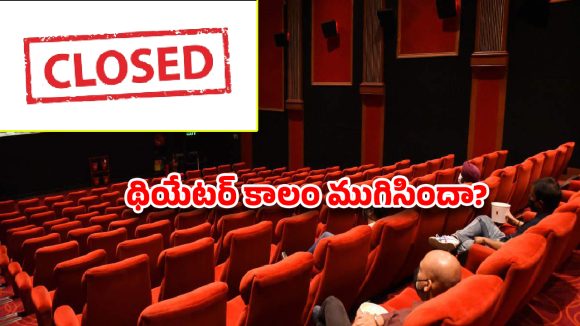
Is the magic of the silver screen fading? Once a beloved family outing, movie-watching has increasingly shifted to the comfort of our homes thanks to the OTT boom. With big screens and theatre-like sound just a click away, audiences are now discerning, reserving their theatre trips only for grand, spectacle films. Is this the curtain call for our beloved cinema halls?
Theatre vs. OTT: Audiences Draw The Line
Is it the end for theatres? Due to the OTT boom, audiences are drifting away. Once, watching a movie meant a trip to the theatre; now, with all conveniences available at home – a big screen, Dolby sound, and a movie with a single click in the comfort of one’s family – the number of audiences visiting theatres has dwindled. This shift has led audiences to draw a clear line between the theatre experience and OTT content. People now prefer to watch grand-scale films like ‘Kalki 2898 AD’ and ‘Salaar’ only in theatres, believing that ordinary stories do not warrant a theatrical outing.
If the content lacks a genuine theatre experience, even a big star won’t guarantee success. Why should an audience member step out when cinema is no longer just entertainment, but a ‘luxury’? One song, two fights, a bit of sentiment in between – is this worth spending a thousand rupees? If the story is understood from the trailer, should one wait three hours for the climax? This might sound harsh, but if a film doesn’t offer value commensurate with the luxury of a theatre outing, the audience will press their AC remote at home rather than bother climbing theatre stairs. The old saying, “People will come if the movie is good,” has been replaced by, “People will come only if they feel the film ‘demands a theatrical viewing’.” The audience has definitively drawn a line between content watched at home and content experienced in a theatre.
Films like ‘Kalki 2898 AD’, ‘Salaar’, ‘Avatar 2’, ‘Bimbisara’, or ‘Hanuman’ succeeded in theatres precisely because their grand scale and sound design cannot be fully experienced on a small screen. That unique big-screen immersion is what drives audiences to queue up. Conversely, a good film like ‘Ante Sundaraniki’, despite starring Nani, struggled in theatres but became an OTT sensation. This signifies that audiences have gained clarity: ordinary stories do not require a theatre. If a film lacks that distinct “theatre experience,” it’s simply not worth the trip.



Grand Scale & Shared Joy: Theatrical Must-Haves
Comparing ‘Salaar’ and ‘Guntur Kaaram’ highlights this distinction. The world of Khansaar and the massive action sequences in ‘Salaar’ simply don’t deliver the same thrill when watched at home, which is why audiences flocked to theatres. ‘Guntur Kaaram’, despite having a superstar like Mahesh Babu and generating fan frenzy, had a story and making that felt more like a family drama one might watch on TV. Despite good openings, it failed to impress theatre audiences in the long run. This is the best example that no matter how big the hero, if the content lacks a “theatre experience,” it’s merely OTT material. Similarly, films like ‘Jailer’ or ‘Pushpa’ drew audiences primarily for the yearning to enjoy their ‘mass moments’ together with everyone else. Any film that fails to provide that “community experience” will simply end up on the OTT waiting list.
It’s no longer enough for a movie to simply be “good” if it fails to create a “collective emotion.” ‘Animal’, for instance, ran successfully in theatres despite its three-and-a-half-hour runtime because every scene triggered an emotion, keeping the audience glued to their seats. On the other hand, films like ‘Radhe Shyam’, no matter how grand, drove audiences out the moment they got bored. A theatre experience fundamentally means laughing and cheering together with hundreds of people. Current films are failing to create that “group emotion.” People flocked to theatres for ‘DJ Tillu’ because the joy of enjoying that comedy together with everyone else was unique. But now, 90% of films are limited solely to hero elevations. When there isn’t a single scene for the common audience to laugh with their family, they decide that going to the theatre is a waste. There’s often a lack of soul and connection. ‘Drishyam 2’, for example, went directly to OTT in Malayalam but became a blockbuster in Hindi theatres. Why? The suspense in the story created an urgency to experience it together with everyone.
Formula Fatigue and The Pause Button Problem
It’s a misconception to believe that audiences will flock to theatres solely for a massive budget. Consider ‘Sita Ramam’ versus ‘Radhe Shyam’. Hundreds of crores were spent on ‘Radhe Shyam’, with spectacular visuals, yet the audience failed to connect because it lacked soul. ‘Sita Ramam’ also boasted visuals but, more importantly, was rich in emotion, which is why it became a theatrical classic. Small films like ‘Masooda’ and ‘DJ Tillu’ succeeded because they offered audiences a ‘high return on investment’ at lower or standard multiplex ticket prices.
The film industry is currently operating under a delusion, thinking the audience doesn’t like theatres. However, the truth is that audiences have grown weary of the ‘so-called’ commercial formula. Moreover, everyone knows that films will arrive on OTT within a month of their theatrical release. The thought, “What if I miss it this week? I can always watch it at home next month,” is precisely what is keeping audiences away. Once, a film would run for at least 100 days; now, even 10 days is considered a great run. The moment a film is sold to digital platforms, its sanctity is diminished, and OTT has given the audience a powerful weapon: the “pause button.” If a film gets boring in a theatre, the audience has to endure it; at home, they can change the film with a single click.
Cinema’s Price Tag: From Habit to Luxury
For an ordinary family, going to the theatre has now become a matter of financial planning. A movie ticket that once cost 50 rupees, allowing a common person to watch two films a week, now costs 300, plus 100 for parking and 500 for popcorn, leading to a total expenditure of 2000 to 3000 rupees. If filmmakers take 100 crores in remuneration and pass that burden onto the audience through exorbitant ticket prices, the audience will exact their revenge by watching the film not in theatres, but on Telegram or OTT. Stories have been sacrificed at the altar of 100-crore packages. In the clamour of cutouts, content has been cast aside. That’s why the audience is now thinking ten times before stepping into a theatre.
Stunning visuals merely please the eyes, but only a compelling story will keep an audience captivated in their theatre seats. The audience’s desire to attend hasn’t diminished; it has been forcibly suppressed. Once, going to the cinema was a “habit”; now it’s a “luxury.” No one readily abandons a habit, but one can certainly live without a luxury. Therefore, the challenge for filmmakers now is to restore cinema to the status of a “habit.” Ultimately, a theatre is more than just a screen between walls; it is a magic box. When that box lacks magic, the audience will simply turn to the remote control in their hands. It’s evident that films lacking a genuine theatre experience will struggle to achieve their desired outcomes. For theatres to survive, they must implement new changes. If filmmakers fail to adapt and continue to ignore the clear distinction the audience has drawn between a compelling theatre experience and mere OTT content, theatres are inevitably destined to become mere ‘museums’.
Looking Ahead
The choice is clear: redefine the cinema experience or witness its slow demise. For us, theatre has always been a grand celebration, a shared emotion. If that magic isn’t rekindled with compelling stories and true cinematic moments, our beloved halls risk becoming mere relics, their screens forever dark. The onus is now on us all.


