📌 Key Points
- Nani’s Paradise: Dhumavati Devi’s Shocking Big Screen Debut!
- Crow as vehicle? Dhumavati Devi’s startling mythology unveiled!
- Nani’s hero from 1980s Savari tribe: Unexpected twists guaranteed!
- Married couples banned from her worship? Paradise challenges norms!
Nani’s highly anticipated film ‘Paradise’ is already the talk of the town, especially with its intriguing portrayal of Dhumavati Devi. Audiences are buzzing about the shocking mythology revealed, particularly the surprising detail of her crow vehicle. This unique concept, and the glimpse of a ‘Crow community,’ promises a truly astonishing cinematic experience that has everyone curious for its August 21st release.
Nani’s Paradise: Dhumavati’s Crow Mystery
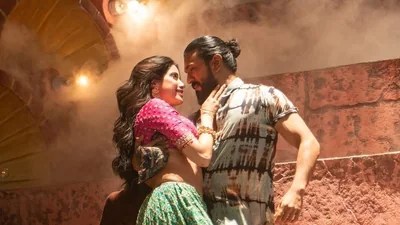
Nani’s upcoming film ‘Paradise’, directed by Srikanth Odela and produced on a grand scale, is generating immense anticipation. Scheduled for release on August 21st, the film’s intriguing glimpses and songs have already heightened expectations, particularly concerning its unique depiction of Dhumavati Devi and her surprising portrayal. The introduction of this unique concept is creating a sensation, with many wondering why a crow serves as her vehicle – a truly astonishing detail. One notable glimpse featured what is referred to as ‘Kaki Jathi’ or the Crow community, adding to the film’s mystique.
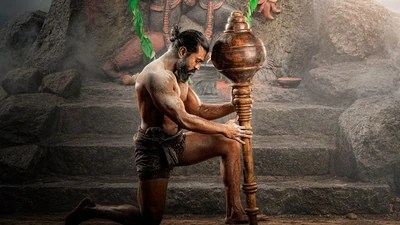
Recently, Kasarla Shyam, who penned the ‘Aaya Share’ song for the film, shared several fascinating details with the media. He revealed that ‘Paradise’ is set in Hyderabad and Secunderabad in the 1980s, narrating the story of a nomadic ‘Savari tribe’ from which a hero emerges. This community is depicted worshipping a goddess named Dhumavati, and the film will feature scenes of her worship, potentially accompanied by a dedicated song. Nani’s character is also expected to undergo unexpected twists within this narrative.
The revelation of Dhumavati Devi as a central figure in Nani’s ‘Paradise’ has sparked widespread curiosity, prompting many to ask: “Who is Dhumavati Devi?” According to Hindu mythology, Dhumavati Devi is the seventh of the ten Mahavidyas, a group of Hindu Tantric goddesses. She represents a terrifying aspect, typically appearing as a widow clad in a white saree. Instead of horses, her chariot is drawn by her vehicle, a crow, with crows often depicted circling around her. Her weapon is a winnowing fan. This goddess is associated with inauspiciousness and is believed to reside in places where cremations take place. She is said to manifest during the dissolution of the universe and appears in society as the isolated, unattractive, and unfortunate, representing the poor, beggars, lepers, and sick. Dhumavati resides in uncivilized, dangerous locations such as deserts, ruined houses, areas of poverty, hunger, thirst, strife, children’s sorrow, wilderness, and cremation grounds. Some interpretations also describe her as a sorceress, symbolizing life’s terrifying hardships. Given her crow vehicle, she is attributed with crow-like characteristics and is often depicted sitting on a corpse and adorned with ashes.



Dhumavati: The Mahavidya of Shadow and Might
Nevertheless, as a Tantric goddess, scriptures describe Dhumavati as a giver of supernatural powers, a protector from all troubles, and a bestower of ultimate knowledge. She is worshipped by those who seek to defeat their enemies. Notably, Dhumavati Devi is worshipped exclusively by individuals not in partnered relationships – celibates, widows, renunciants, and Tantrics – with married couples typically refraining from her worship. While there are very few temples dedicated to her nationwide, one exists in Varanasi, and she is also reportedly worshipped through Tantric rituals in some cremation grounds.
In ‘Paradise’, it is understood that Nani and his Savari tribe will be depicted worshipping Dhumavati Devi, linking the film’s narrative directly to this profound mythological figure. The character of Dhumavati Devi, with her surprising iconography and deep mythological roots, is poised to add significant intrigue and depth to Nani’s ‘Paradise’, promising a compelling cinematic experience.
Looking Ahead
Nani’s ‘Paradise’, embracing Dhumavati Devi and her profound mythology, promises a cinematic journey into rarely seen spiritual depths. This bold choice elevates expectations, ensuring a culturally rich, compelling experience. We keenly await vital conversations this powerful goddess will spark.