📌 Key Points
- NTR directed mega-hit Gulebakavali Katha, uncredited! Why?
- ‘s fantasy epic shattered records, a cinematic milestone!
- NTR’s vision: pioneering visuals, music, ahead of its time!
- Hero’s divine quest: betrayal, sacrifice, restoring lost sight!
Dive into the fascinating tale of N.T. Rama Rao’s 1962 blockbuster, ‘Gulebakavali Katha‘. This Telugu fantasy swashbuckler, a record-setter in its time, drew inspiration from Arabian Nights folklore. While NTR captivated audiences on screen and behind the camera, a curious omission persists: his directorial genius went uncredited. Join us as we explore this overlooked chapter and its lasting impact on cinema.
NTR’s Uncredited Masterpiece
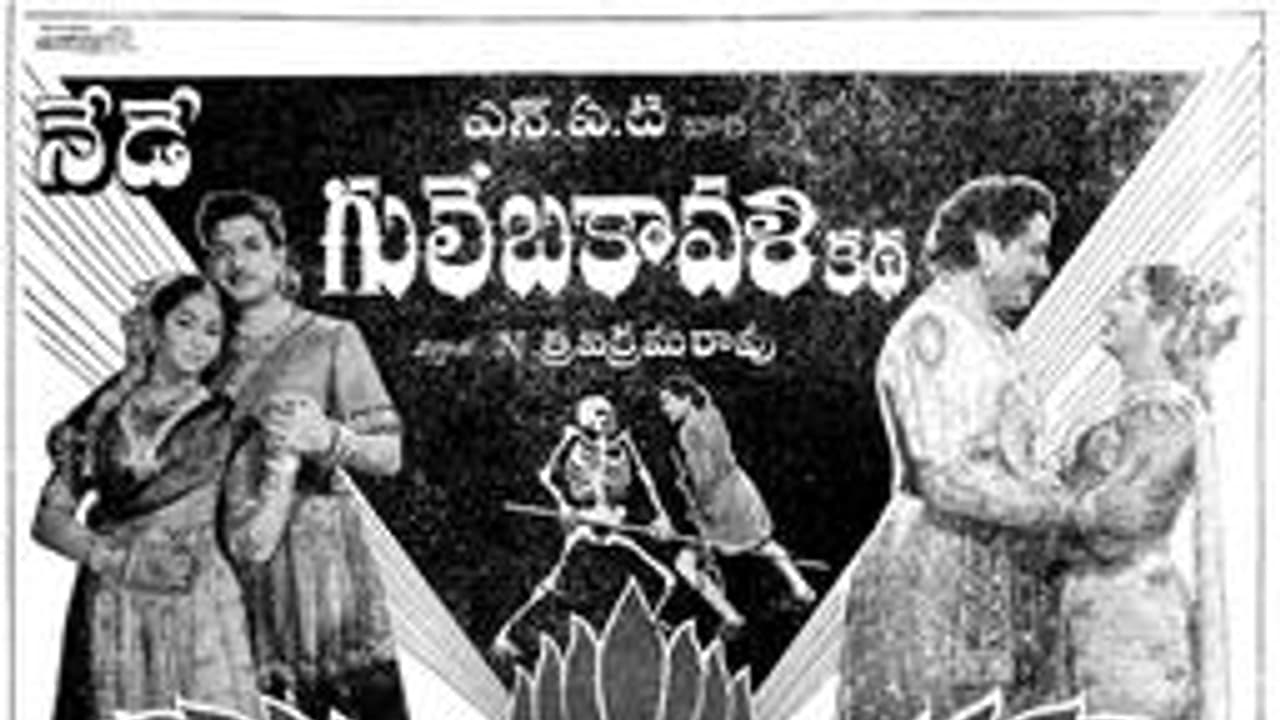
N.T. Rama Rao’s ‘Gulebakavali Katha’ holds a significant place in the history of Telugu cinema, achieving phenomenal success and setting numerous records upon its release in 1962. A Telugu fantasy swashbuckler, the film was based on the Gulebakavali story from the collection of Arabian Nights folklore. While NTR himself directed the movie and starred alongside Jamuna, with senior actors like Nagaratna and Rajanala in pivotal roles, a curious fact remains: his name was not explicitly credited as director in the titles. The film, produced by N. Trivikrama Rao under the National Art Theatres banner, was the second Telugu adaptation of the “Gulebakavali Katha,” following an earlier version released in 1938. Trivikrama Rao was credited for “Story Collection,” rather than as a specific writer for this adaptation.
The narrative unfolds in the kingdom of Patliputra, ruled by King Chandrasena (Mukkamala), who has two wives, Gunavati (Rushyendramani) and Rupavati (Chayadevi). The king favors Rupavati, with whom he has three sons. Rupavati’s wicked brother, Vakraketu (Rajanala), plots to seize the kingdom, bringing his nephews under his influence. Meanwhile, Gunavati, longing for a child, performs penance to Lord Shiva and is blessed with a son, Vijaya (N.T. Rama Rao). Envious, Vakraketu bribes astrologers to prophesy that the king would lose his eyesight upon seeing his son. Frightened, the king orders the infant to be sent away, and Vakraketu then orders the boy’s murder. However, through divine grace, Vijaya is saved and raised by a shepherd couple, growing into a brave young man.
The Hero’s Perilous Quest
Vakraketu devises another plot, gradually blinding King Chandrasena with poison. The next day, when Vijaya accidentally sees the king, the king, believing the astrologers’ words, completely loses his sight. Suspicious, Vijaya secretly enters the palace and uncovers the secret of his birth. He learns that the only way to restore his father’s sight is to bring the “Gulebakavali flower,” which blooms on a full moon day in the celestial realm (Deva Loka). Resolving to clear the false accusation against him, Vijaya embarks on his journey with his mother Gunavati’s blessings. Simultaneously, his step-brothers also set out for the flower. During their quest, Vijaya’s step-brothers encounter Yuktimati (Jamuna), a cunning gambler, who defeats them and turns them into slaves. Vijaya, disguised, defeats Yuktimati, marries her, and frees his brothers. The love story between NTR and Jamuna in this segment proved to be a major highlight. Subsequently, the step-brothers insult a sage and are turned into stones. Vijaya, however, continues his journey. With divine assistance, he reaches the celestial realm, where he marries Bakavali (Nagaratna), Indra’s daughter, in a Gandharva marriage. He then attempts to retrieve the Gulebakavali flower from a lake, but due to impurity, the lake explodes. Believing Bakavali to be responsible, Indra imprisons her. Vijaya returns to Earth with the flower and restores his brothers to life, but they treacherously attack him and steal the flower. Meanwhile, Vakraketu seizes the kingdom and imprisons everyone. Vijaya removes a divine maiden’s curse, and she takes him back to the celestial realm, where he learns of these developments. In an act of self-sacrifice, he offers his eyes to restore the sacred lake. The film then unravels how the hero, having lost his sight, achieves his objective, regains his vision, and restores his father’s sight.



The pairing of NTR and Jamuna sparkled on the silver screen, captivating audiences. Nandamuri Taraka Rama Rao’s portrayal of Vijaya was truly outstanding, demonstrating courage, passion, and compassion as the young prince, with a commanding screen presence, particularly in action and celestial sequences. Jamuna, as Yuktimati, gave a sharp and vibrant performance as a clever character who evolves from deceit to aligning with the hero, significantly bolstering the film’s narrative. Nagaratna, as Bakavali, captivated audiences with minimal dialogue, her character’s innocence endearing her to everyone. Rajanala’s imposing performance as the wicked Vakraketu heightened the dramatic tension. Mukkamala beautifully conveyed gravitas as King Chandrasena, while Rushyendramani moved audiences with her emotional portrayal of Gunavati. Chayadevi’s shrewdness as Roopavati was also brilliantly executed.
Technical Artistry and Stellar Cast
Technically, ‘Gulebakavali Katha’ was far ahead of its time. As a director, NTR demonstrated a brilliant vision, successfully overseeing the entire team while also delivering a magnificent performance himself. Ravikanth Nagaich’s cinematography delivered stunning visuals, showcasing celestial scenes, natural landscapes, and action sequences magnificently. Art Director K. Narasimha Rao’s sets, especially the celestial designs, enhanced the film’s visual grandeur. The meticulous editing by S.P.S. Veerappa and G. Shivamurthy ensured the narrative never lost its balance. The film’s music, composed by Joseph-Vijaya Krishnamurthy, was a primary strength, truly bringing the story to life. Songs like “Nannu Dochukonduvate,” “Kalala Alalapai,” and “Madana Sundara Na Dora” immensely captivated the audience and remain evergreen. Notably, C. Narayana Reddy made his cinematic debut as a lyricist with this film.
‘Gulebakavali Katha’ became a super hit, securing a unique position among fantasy films of its era and marking a milestone in NTR’s career. It received both audience appreciation and critical acclaim, once again proving his multifaceted talent. The film is available to watch on YouTube for those interested in experiencing this piece of Tollywood history. However, the question of why N.T. Rama Rao, despite directing this landmark film, chose not to credit himself on screen continues to intrigue.
Looking Ahead
“Gulebakavali Katha” forever showcases NTR’s uncredited genius. The enduring mystery of his directorial silence only amplifies the legend of a multifaceted artist. It reminds us that true brilliance transcends recognition, quietly shaping Telugu cinema’s glorious tapestry.