📌 Key Points
- Rana Daggubati discusses the physical and mental demands of filming ‘Baahubali’ over six years.
- The actor highlights the challenges of pioneering visual storytelling in Indian cinema.
- Daggubati notes the commitment of the cast and crew was essential for the film’s success.
- He reflects on his physical transformation for the role and its impact on public recognition.
Rana Daggubati has opened up about the grueling six-year journey of filming ‘Baahubali.’ He emphasized the unprecedented challenges the cast and crew faced while creating the groundbreaking visual spectacle that redefined Indian cinema.
The Six-Year ‘Baahubali’ Journey
Rana Daggubati recalled Baahubali’s demanding 6-year journey, emphasising the challenges faced by cast, crew in creating groundbreaking visual storytelling
Filmmaker SS Rajamouli ’s Baahubali redefined the scale of Indian cinema when it was released, setting a new benchmark for storytelling, action and visual spectacle. The franchise not only shattered box office records but also emerged as one of the most celebrated Indian film sagas of all time. Now, actor Rana Daggubati has opened up about the immense physical and mental toll the film took on him during its making.
He said, “We shot that for like six years or something. So most of those were like that. It’s not about one scene because, at that point, we were discovering how to make that film as well. It was not like we had so many war films being made. It was not like car action choreographers or visual effects were up to that mark. It was pushing everyone’s boundaries. It needed a master like Rajamouli and a team that came together for that vision. Usually, in a film, we can’t last for that long in our minds.”



Pushing Boundaries in Indian Cinema
Rana further shared that the fact the cast and crew remained committed to the film for six to seven years was, in itself, a major achievement. He explained that the long production timeline came from the team attempting something genuinely ambitious and previously unseen in Indian cinema. According to him, there was a unique thrill in bringing scenes to life that had never before been portrayed on screen at that scale.
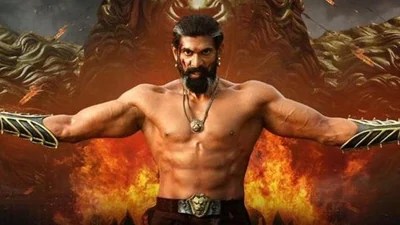
The actor also recalled how the transformation he underwent for the role of Bhallaladeva made him wonder whether audiences would still recognise him in the same way after the film.
He said, “Not the hot guy. My physicality changed. So I was coming back from the States, and I thought, would they recognise me now because I look so different from the guy who left? And the first person who recognised me was an immigration officer who was African-American. I took my mask off. He said, ‘Wow, that’s King Bhallaladeva.’ I said that’s it, boss. This film is ageing beautifully, and that’s four or five years after the film. So, I think cinema is forever. It creates an impact that doesn’t go off.”
Transformation and Recognition
The film received both national and international acclaim for its visual effects, performances and Rajamouli’s direction, and went on to become the highest-grossing Telugu film at the time.
Its sequel, Baahubali: The Conclusion, turned out to be an even bigger phenomenon and remains one of the highest-grossing Indian films of all time, with a worldwide box office collection of around ₹ 1,788 crore.
Rana Daggubati’s reflections underscore the immense dedication and innovation required to create a cinematic landmark like ‘Baahubali.’ The film’s impact continues to resonate, showcasing the power of ambitious storytelling in Indian cinema.