📌 Key Points
- Saigal blazed trail: India’s first singing-actor on screen!
- Imagine! Saigal sang LIVE on film sets, no recording tapes existed.
- Devdas curse? Saigal died at 42, tragically mirroring his iconic role.
- His final wish: ‘Jab Dil Hi Toot Gaya’ played at his own funeral.
K.L. Saigal: a name that resonates with timeless melody, revered as Indian cinema’s pioneering singing star. While his soulful voice profoundly influenced generations, even in our South Indian soundscape, much remains shrouded. Beyond the legendary songs we cherish, shocking truths and untold secrets lurk. Join us as we uncover the fascinating, lesser-known facets of this iconic voice.
The Pioneer’s Melodious Start
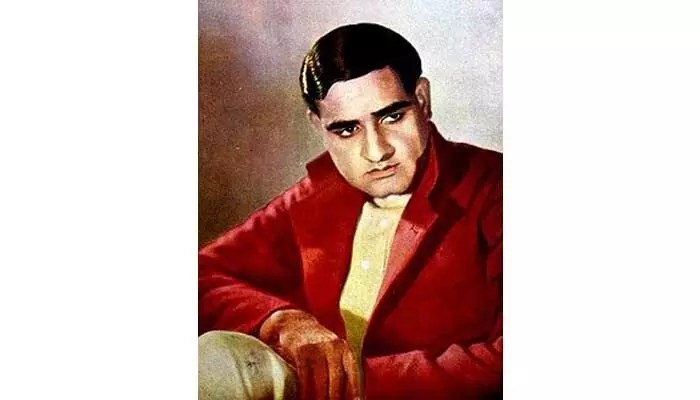
K.L. Saigal! Just hearing that name evokes sweet music in one’s mind. His voice is history, his song an experience. Let’s now explore some interesting facts about this legendary singer, whose melodious voice holds shocking truths and secrets you might not know. K.L. Saigal was not just a singer; he was the first echo that lent its voice to Indian cinema, establishing himself as the first singer and actor to do so. Even today, when his song is heard, the mind gently turns like an old gramophone. Saigal’s voice is a timeless sound, his singing not confined to any one era, but rather forming the very foundation of Indian film music. His voice is a melodious history.
The uniqueness of Saigal’s songs lay in how he gave cinematic form to classical ragas, bringing live singing to the screen. In the early days, when recording tapes didn’t exist, he would sing live while instrumentalists on a buggy played beside him, all simultaneously filmed by the camera. From that era, Saigal established himself as an actor-singer, proving that singing is not just about voice, but ’emotion’. He sang with unmatched skill across all genres like Khayal, Ghazal, Bhajan, Geet, and Dadra, displaying unparalleled talent.
K.L. Saigal was the first superstar among Indian singer-actors, a colossal figure who dominated Indian cinema. Many today may not know about the successes achieved by the songs he sang in the Hindi film industry, yet his magic and charm remain alive in the hearts of music lovers even today, continuing to be an inspiration for new generations of artists. He served as an ideal for numerous singers like Talat Mahmood, Kishore Kumar, and Mukesh; many initially emulated his style before developing their own unique vocal identities. His songs still resonate in the hearts of music enthusiasts today.



From Silence to Superstar
Saigal was born on April 11, 1904, in Jalandhar to Amarchand Saigal and Kesar Bai. His mother had a great interest in devotional music, and from a young age, he would accompany her to Sufi Pir Salman Yusuf to listen to bhajans and kirtans. His father, Amarchand Saigal, worked in the court of Maharaja Pratap Singh of Jammu, but Saigal’s decision to drop out of studies and pursue music disappointed him. Once, at the age of 13, his voice changed, and Saigal remained silent for months. Following the advice of a hermit, he began rigorous practice. Despite lacking formal musical training, he rose with the encouragement of great singers like Fayyaz Khan, Pankaj Mullick, and Pahari Sanyal, creating his own unique style. A representative from Hindustan Record Company once heard his singing, recognized his talent, and secured a recording contract with him. His first record, “Jhoolna Jhulao,” was a great success.
Due to a dispute at the Remington company, he quit his job and, on a friend’s advice, moved to Calcutta, then the center of cinema. Despite not knowing the language and having no acquaintances, he went boldly. There, P.C. Boral and Pankaj Mullick introduced Saigal to B.N. Sircar, the owner of New Theatres. Sircar hesitated, wondering how to employ someone who knew neither Bengali nor classical music, but convinced by Boral’s assurance, Saigal joined New Theatres Studio with a monthly salary of 200 rupees. Although he initially hesitated to become an actor, he later agreed, debuting on screen in 1932 with the films ‘Mohabbat Ke Aansoo’, ‘Subah Ka Sitara’, and ‘Zinda Lash’. However, these three initial ventures were failures.
His first success came later in 1933 with ‘Puran Bhagat’, where the film’s music director, R.C. Boral, presented an innovative style by blending classical music with folk songs. In 1934, he achieved huge success with ‘Chandidas’. Subsequently, ‘Devdas’, released in 1935, established him as a national superstar. This film, based on Sarat Chandra Chattopadhyay’s novel, brought him everlasting fame. Songs like ‘Balam Aaye Baso’, ‘Dukh Ke Ab Din’, and ‘Jab Dil Hi Toot Gaya’ from the film became immortal classics. He sang in numerous styles such as Khayal, Bandish, Ghazal, Geet, Bhajan, Hori, and Dadra, performing in Hindi, Urdu, Punjabi, Bengali, Tamil, and other languages.
Tragic End, Immortal Legacy
Tragically, his portrayal of an alcoholic character in ‘Devdas’ profoundly influenced his own life. His health deteriorated, and he passed away on January 18, 1947, at the young age of just 42. His song ‘Jab Dil Hi Toot Gaya’, composed by Naushad for the film ‘Shahjahan’, became an anthem for broken hearts. It is said that Saigal had requested this song be played during his funeral—an immortal song that gave voice to sorrow. Furthermore, his song ‘Balam Aaye Baso More Man Mein’ from ‘Devdas’ powerfully conveyed the yearning, anticipation, and tenderness of love, with the emotional anguish of the Devdas character distinctly audible.
K.L. Saigal’s legacy as a pioneer, an innovator, and a profound emotional singer continues to enrich Indian music history, inspiring generations long after his time.
Looking Ahead
K.L. Saigal’s enduring legacy as a pioneer, innovator, and profound emotional singer continues to enrich Indian music, inspiring generations. From the South, we predict his melodies, despite truths revealed, will eternally resonate—a poignant testament that true artistic genius transcends all complexities, achieving immortality.