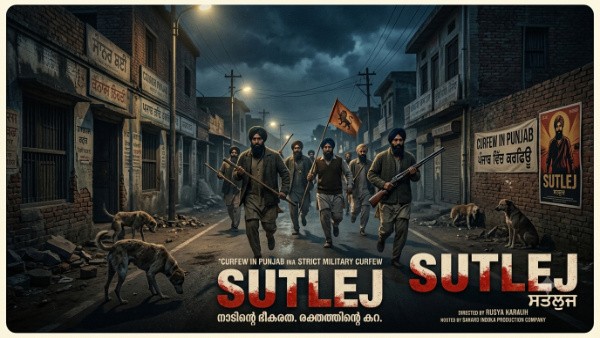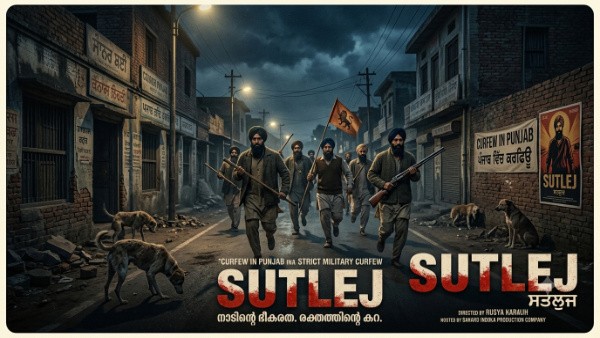
A new film, ‘Sutlej,’ has ignited a storm, much like a potent political thriller from our own cinematic landscape. Removed from OTT within hours, it courageously pulls back the curtain on a horrifying past: the Khalistani terrorists’ brutal ‘decree’ condemning barking dogs to death in Punjab. This swift censorship speaks volumes about the shocking truths it dared to reveal.
Key Points
Sutlej film pulled hours after release! National security cited.
Khalistani terror’s dark secret: dogs brutally executed!
Barking dogs sealed their fate: terrorists ordered their killing.


Horrific untold chapter: Punjab’s voiceless victims revealed.
‘Sutlej’ Unveils Punjab’s Brutal Truths
The film ‘Sutlej’ was removed from OTT within hours of its release, revealing the shocking truths behind the cruel decree to kill dogs amidst Khalistani terrorism.
The central government issued orders to take down the film from the streaming platform, citing that it contained scenes detrimental to national security and India’s sovereignty.
‘Sutlej’ depicts the harrowing events that unfolded in Punjab during the 1980s and 1990s, a period when countless unknown Sikhs lost their lives. It was later revealed that atrocities committed by the Punjab police were largely responsible. Social activist Jaswant Singh Khalra then courageously raised his voice, demanding justice for the deceased Sikhs, a fight that forms the core narrative of ‘Sutlej’.
During the era of Khalistani terrorism, those who died were primarily categorized into three groups: ordinary civilians, police personnel, and terrorists. Subsequently, sub-categories accounted for the numbers of Hindus, Sikhs, Namdharis, journalists, politicians, and judges who perished. However, despite this extensive categorization of human victims, one voiceless creature was tragically overlooked in this fight for justice: the dogs of Punjab.
When Khalistani terrorism raged, it wasn’t just humans who were murdered; voiceless animals like pet and stray dogs also became victims – or rather, they were deliberately killed. A natural question arises: what animosity did these terrorists hold against dogs?
Nights in Punjab villages, where Khalistani terrorism was rampant, were terrifying. Caught between terrorist attacks and police operations, villagers lived with their lives constantly at risk. Even silence in these villages was perilously dangerous. These nights were fraught with moment-to-moment tension, and the fear of who might lose their life haunted the villagers.
Silent Nights, Deadly Barks
It was precisely at such a critical juncture that a dog’s bark instilled fear among the villagers. During those silent nights, a barking dog would alert both the police and the terrorists. The police would arrest or torture innocent villagers, suspecting the presence of terrorists. Conversely, the terrorists would be tormented by the fear that the dog was giving away their location.
Therefore, if a dog barked during those nights, it was as if it had sealed its own fate, welcoming death upon itself.
Villagers would initially try to silence the barking dog; some would scold it, others would throw stones, and some would try to soothe it. Yet, the dog would not cease barking. This heightened the villagers’ anxiety, and the dog, instead of being a loyal companion, became perceived as a threat.
Consequently, attempts were made to drive these dogs away from the village. Alas, the poor dog had no notion of who the terrorists were or who the police were; it merely barked according to its natural instinct.
This very issue was depicted by prominent Punjabi writer Waryam Singh Sandhu in his short story ‘Chauthi Koot’, which also earned him the Sahitya Akademi Award. Based on this short story, Gurvinder Singh directed a film in 2015, also titled ‘Chauthi Koot’.
Director Gurvinder Singh meticulously attempted to portray all scenes as close to reality as possible. The film draws from a true incident that occurred in the family of Sandhu’s brother. He recounted that his brother’s home had two dogs, and the family held deep affection for them. Under such grim circumstances, one day, orders came from Khalistani terrorists to kill both dogs. They reportedly left cyanide capsules at the family’s doorstep for this purpose.
Khalistani Decree: Dogs As Victims
Terrified, the family mixed the cyanide capsules into curd rice and fed it to the voiceless animals, silencing them forever. In this struggle between the lives of animals and human lives, those voiceless creatures ultimately became victims. Sandhu was moved to tears, stating that this incident pained him deeply.
Death was the decree if a dog barked in the silent nights. Khalistani terrorists issued a mandate that if anyone harbored dogs in their homes, they were to be killed immediately. Otherwise, they warned that even if a dog merely whined, they themselves would shoot and kill it, or murder its owners.
Suspecting that their presence might be revealed, the Khalistanis began eliminating the dogs in the village. Beyond imposing bans on music and drum playing at wedding ceremonies, atrocities such as the assassination of the renowned folk singer Amar Singh Chamkila and his wife struck terror into the heart of Punjabi society at that time. As soon as the sun set, the streets would become eerily silent, like graveyards.
Currently, films like ‘Sutlej’ speak about the people who unjustly lost their lives during that period. But the cries of distress of the voiceless pet animals from that era, buried in the layers of history, have forever remained an unhealed wound.
The film ‘Sutlej’ captivated audiences with its controversial truths, shedding light on this dark chapter where hundreds of dogs became victims in Punjab during the 1980s-90s, alongside Jaswant Singh Khalra’s fight for justice.
Looking Ahead
The film “Sutlej” offers a searing testament to the brutal realities of extremism, where even innocent animals became targets. This chilling exposé from Punjab’s dark era demands our collective remembrance, ensuring such depravity, whether against man or beast, is never forgotten, and justice ultimately prevails.