📌 Key Points
- Jnanpith Award for Vairamuthu ignites #MeToo fury!
- Chinmayi blasts Jnanpith choice, re-igniting past allegations.
- Kamal Haasan slammed by Chinmayi! “Stalwarts ignore victims.”
- Victims silenced? Chinmayi alleges industry’s “unofficial ban.”
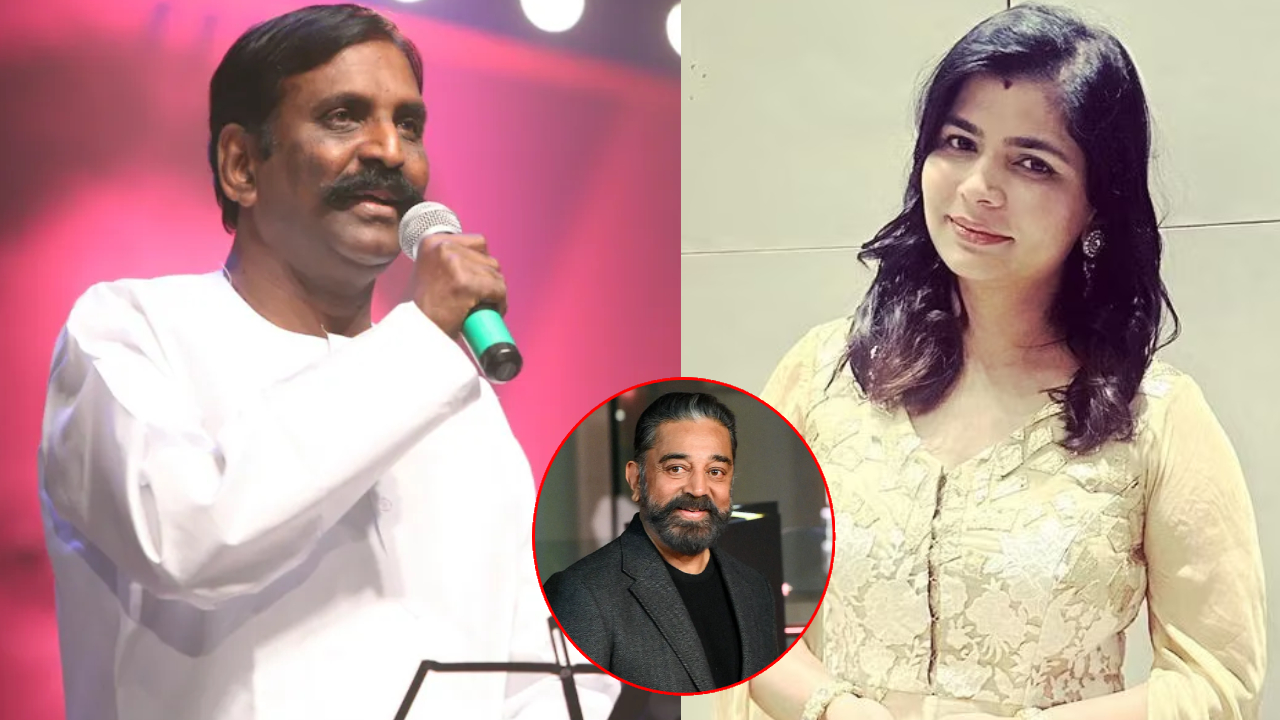
What should have been a jubilant occasion for Tamil literature has erupted into a massive controversy. As poet Vairamuthu receives the Jnanpith Award, singer Chinmayi Sripaada has vehemently slammed the decision, reigniting MeToo allegations against him. She further targeted actor Kamal Haasan, questioning his stance and past actions regarding similar claims, igniting a fiery debate across South India.
Prestigious Award Sparks #MeToo Backlash
While the conferment of the Jnanpith Award, a pinnacle of Indian literature, upon a Tamil writer after decades is a historic and joyous occasion for Tamil Nadu, its bestowal upon renowned poet Vairamuthu has become mired in controversy.
The sensational remarks made by singer Chinmayi Sripada have now become a hot topic, bringing the #MeToo movement that shook the country in 2018 back to the forefront. Chinmayi expressed outrage over the award announcement, questioning why personal conduct and ethics were not taken into consideration for such a prestigious honor. She vehemently recalled serious criticisms and allegations of sexual harassment against Vairamuthu, which she had previously made public.
The controversy deepened with Chinmayi’s criticism of not only Vairamuthu but also film and political stalwarts supporting him, specifically targeting ‘Ulaganayagan’ Kamal Haasan. Kamal Haasan’s post, expressing pride in a Tamilian receiving this honor after Jayakanthan and praising Vairamuthu as a close friend, drew sharp condemnation. Chinmayi alleged that prominent figures, including Kamal Haasan, who have transitioned from cinema to politics, are refusing to listen to the voices and pleas of victims, citing the friendship between Kamal Haasan and Vairamuthu.



Victims’ Voices: Society’s Double Standards Exposed
Chinmayi herself expressed distress and anguish, stating that she faced an unofficial ban from dubbing and singing in the Tamil film industry for speaking the truth, and that the voices of many women have been systematically suppressed. She sharply commented that men always stand by their ‘brothers, uncles, and friends,’ prioritizing their friendships over the suffering of women.
Chinmayi alleged that this society exhibits clear double standards, ignoring countless women who have given up their dreams, yet granting top honors to those facing accusations. She further commented that this struggle between literary honor and social morality has now transformed from being merely about an award to a larger question of whether there is a system in place to hear the voices of victims. Consequently, Chinmayi’s comments have become sensational and are widely circulating on social media.
Looking Ahead
Chinmayi’s unwavering challenge isn’t merely about an award; it’s a powerful clarion call exposing deep-seated double standards within our society. As these questions reverberate, it’s evident that until victims’ voices find a truly equitable system, the clamour for accountability will only intensify, forever altering our cultural fabric.